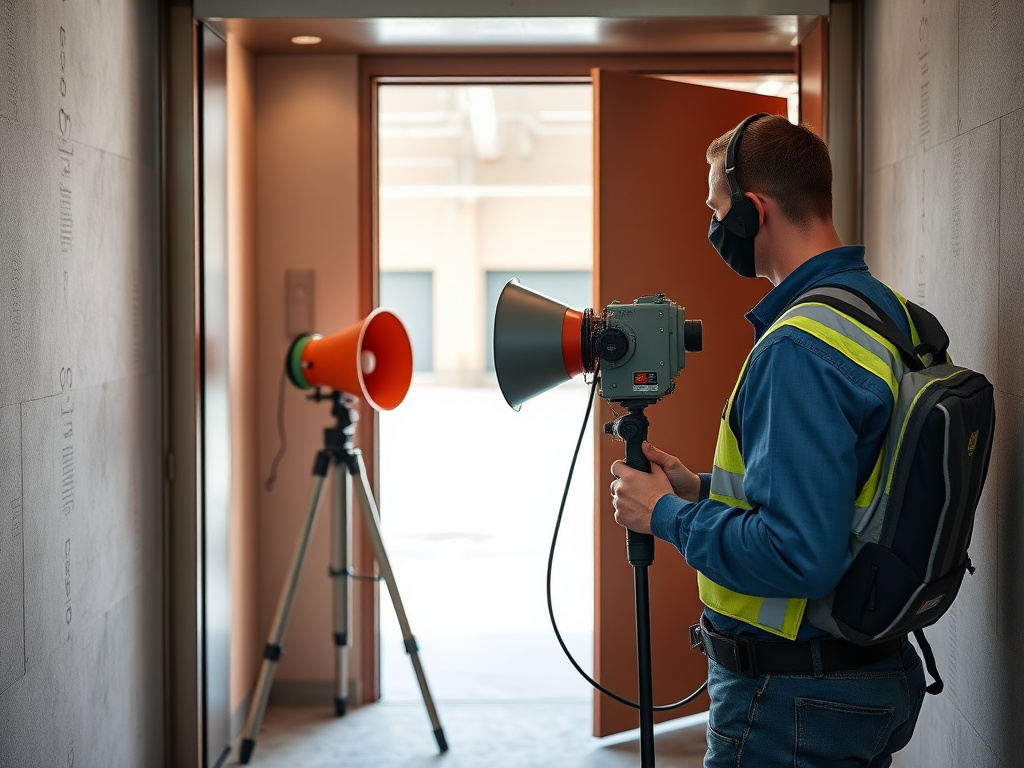
Energy Code Compliance & Audits
Energy Code Compliance & Commercial Energy Audits — Statewide Arizona
Arizona has no single statewide energy code — every city and county adopts and amends its own. We track the patchwork so your project's envelope, testing, and documentation match whichever code cycle actually governs your jurisdiction.
Why This Is Genuinely Complicated
Arizona is a home-rule state — there is no single mandatory statewide energy code
Unlike states with one code enforced from the top down, Arizona lets each city and county adopt and amend its own energy code independently. That's not a minor technicality for a contractor working a single project in a single city, but it becomes a real operational problem the moment a builder, developer, or facility owner has projects in more than one jurisdiction at the same time.
Most major Arizona jurisdictions — including Phoenix, Tucson, and Chandler — currently enforce the 2018 IECC with local amendments. A handful of jurisdictions have moved further: Scottsdale adopted the 2021 IgCC effective January 2023 for commercial and multifamily projects, and Chandler and Cave Creek have adopted the 2021 IECC with their own amendments layered on top. Pima County has been working through a 2024 IECC adoption process as of the most recent draft documentation available — jurisdiction status is worth re-verifying at the time your permit is submitted, since adoption dates and amendment language do shift.
A single-city insulation contractor only ever has to memorize one code cycle. A statewide commercial contractor working a Tucson distribution center, a Scottsdale mixed-use project, and a Chandler industrial building in the same quarter has to know which version of the code applies to each one — and spec, test, and document accordingly. That's the actual expertise this service sells: not just insulation application, but knowing which rulebook governs your specific address.
- ✓Current adopted code cycle confirmed per jurisdiction before we scope a project
- ✓Local amendments reviewed, not just the base IECC/IgCC edition
- ✓Documentation formatted for the specific plan-review process your permitting office uses
- ✓Re-verification built into every new project — code status isn't assumed to be static
What's Included
What a commercial energy audit actually covers
A commercial energy audit isn't a single measurement — it's a set of findings that together tell you where a building is losing performance and what it will take to fix it. For an existing building, an audit typically layers several assessments on top of each other:
Envelope assessment
Insulation type, thickness, condition, and continuity across walls, roof deck, and penetrations — the baseline every other measurement depends on.
Whole-building air-leakage testing
A blower-door test quantifies exactly how much air the building's envelope is leaking, in measurable units, instead of a general impression of "drafty."
Thermal imaging
Infrared scanning identifies thermal bridging, missing insulation, and gaps that aren't visible from a walk-through alone — especially common at metal-building purlins and girts.
HVAC load implications
Once envelope performance is known, we flag how it changes the load your mechanical system actually needs to handle — the input your engineer needs for right-sizing.
For projects still in design, the same categories apply on paper: reviewing the specified assemblies against the applicable code path before anything gets built, which is far cheaper to fix than after the envelope is closed up. This audit work pairs directly with our commercial & warehouse insulation and metal-building service lines — the audit tells us what to spec, and the install delivers it.
Air-Leakage Testing
Blower-door and whole-building air-leakage testing, in plain terms
A blower-door test pressurizes or depressurizes a building with a calibrated fan and measures how much air moves through the envelope to maintain a reference pressure. The result is expressed as a rate — cubic feet per minute per square foot of envelope area (cfm/sq ft) — at a standard test pressure, commonly 75 Pascals for commercial buildings.
Many Arizona jurisdictions now reference ASHRAE 90.1 and IECC C402.5-style commercial provisions for envelope air-leakage performance. Industry-standard guidance under these provisions typically targets around 0.40 cfm/sq ft at 75 Pa or tighter on the tested envelope — treat this as an industry benchmark to verify against the specific code version your jurisdiction has adopted, not a number that applies identically everywhere.
The reason this matters for spray foam specifically: a continuous, monolithic closed-cell application seals seams, penetrations, and transitions in one pass in a way that batt, board, or blanket systems structurally can't. Buildings insulated with spray foam routinely hit air-leakage targets on the first test instead of needing supplemental caulking and taping after the fact to pass.
| Test method | Whole-building blower-door (fan depressurization/pressurization) |
|---|---|
| Reference pressure | 75 Pa (commercial standard) |
| Typical target | ≤ 0.40 cfm/sq ft of envelope area |
| Referenced by | ASHRAE 90.1 / IECC C402.5-style commercial provisions |
| Envelope type most affected | Metal buildings, tilt-up, and CMU shells with multiple penetrations |
Industry-standard reference target — verify against your project's adopted code version before design finalization.
Mechanical Coordination
HVAC right-sizing from a sealed envelope
Most commercial HVAC systems in Arizona are sized against assumptions about the envelope — how much heat gets in, how much conditioned air leaks out, how much the building's shell resists the state's extreme cooling load. When that envelope is tested and sealed rather than assumed, the load calculation changes, and it almost always changes in the direction of a smaller, less expensive system.
We hand audited data — actual air-leakage numbers, insulation R-values, and thermal imaging findings — to your mechanical engineer so a Manual J or commercial load calculation reflects the building as it will actually perform, not a generic assumption baked into a standard spec sheet. For builders running value-engineering passes on a project, that's a real first-cost lever: a right-sized system installed once instead of an oversized system that short-cycles, costs more upfront, and costs more to run for the life of the building.
This conversation matters just as much on new construction as it does on existing buildings — see our new-construction spray foam service for builders and general contractors for how we coordinate this at framing stage, before mechanical rough-in locks in equipment sizing decisions.
Metal Buildings
Metal-building condensation is a code issue, not just a comfort issue
Uninsulated or poorly insulated metal buildings condense moisture on the interior skin when warm, humid interior air meets a cold metal surface — the "raining ceiling" problem familiar to anyone who has managed a warehouse or ag building through an Arizona monsoon season. That's often treated as a nuisance issue, but it's directly connected to the same envelope performance an energy audit measures: an envelope that's leaking air and failing to control vapor is also failing whatever air-leakage or thermal-performance threshold your jurisdiction's adopted code requires.
An audit on a metal building will typically flag condensation risk alongside air-leakage results, because they share a root cause — thermal bridging at purlins and girts, and gaps in continuity across the building's skin. Closed-cell spray foam addresses both at once: it eliminates the thermal bridging that drives condensation and closes the same air gaps a blower-door test measures. For a deeper look at how we approach metal building envelopes specifically, see our metal building & pre-engineered structure insulation service page.
Plan Review & Inspection
Navigating jurisdiction-specific plan review and inspection
Every permitting office has its own version of what a plan reviewer or field inspector wants to see for envelope work — some want manufacturer cut sheets and batch documentation submitted with the permit application, others want it available on-site at inspection, and a few require third-party test results before a certificate of occupancy is issued. None of that is standardized across Arizona's cities and counties, because the codes themselves aren't standardized.
We build the documentation package to match the jurisdiction the project sits in — not a generic packet that might or might not satisfy a specific plan reviewer. That includes application photos and batch records for the applied foam, blower-door test results formatted for submission, and R-value and vapor-control documentation tied to the code path your project is following. For projects where an energy-code compliance path is being evaluated at the design stage — prescriptive versus performance/ERI — we participate in that pre-construction conversation directly with your architect or energy consultant rather than waiting until the envelope is already specified.
Federal Incentive Status
Section 179D: stated plainly, it is closing to new construction
The federal Section 179D Energy Efficient Commercial Buildings Tax Deduction has been the primary federal incentive for commercial envelope and energy-efficiency work. Under the One Big Beautiful Bill Act (OBBBA), Section 179D closes to any commercial building project whose construction begins after June 30, 2026. Projects that broke ground on or before that date remain eligible for the deduction even if construction finishes later.
For projects that do qualify, deduction amounts for the 2026 tax year range from $0.59 to $1.19 per square foot at the base level, up to $2.97 to $5.94 per square foot for projects that meet prevailing-wage and apprenticeship compliance requirements. A restoration bill — the American Energy Dominance Act, introduced in April 2026 — would reinstate 179D without a scheduled expiration, but it had not passed as of this writing. We do not build 179D eligibility into a project's return-on-investment math unless construction has already started or is firmly scheduled to start before the June 30, 2026 cutoff.
This is a commercial-specific deduction and should not be confused with the separate residential Section 25C credit, which is a different program that already expired for any residential insulation work completed after December 31, 2025. If your project is a new residential build rather than a commercial one, see our residential new-construction spray foam page for how that separate incentive picture applies.
6/30/26
179D construction-start cutoff
$0.59–$1.19
Base deduction, per sq ft
$2.97–$5.94
With prevailing-wage compliance
12/31/25
Residential 25C already expired
Utility Programs
A genuinely multi-utility conversation, because the projects are statewide
A single-region residential contractor typically only has to learn one utility's homeowner rebate cap. A statewide commercial contractor has to track commercial and custom-incentive programs across five or more utility territories at once, because projects land wherever the client is building.
APS & SRP
Arizona Public Service and Salt River Project commercial/business programs cover most of the Phoenix metro, where the state's semiconductor and data-center construction boom is concentrated.
TEP Business Energy Solutions
Tucson Electric Power's commercial program in Pima County offers prescriptive and custom incentives, with custom-incentive amounts reported around 75% of incremental equipment/measure cost per current program documentation — envelope-adjacent measures included, subject to program terms at time of application.
UES
UniSource Energy Services runs commercial programs in the Nogales/border region and the Flagstaff/Prescott gas territory — a different program structure than either the Phoenix-metro or Tucson utilities.
Rural Cooperatives
Trico, Sulphur Springs Valley, Navopache, Mohave, and other rural electric cooperatives cover the balance of the state, each with its own commercial program terms.
Exact rebate percentages and program caps for commercial and custom-incentive programs change more frequently than flat residential rebates, so we verify current terms at the time we scope your project rather than quoting a figure that may be out of date. For the full builder's-guide version of this topic — including code cycles, cost ranges, and the statewide construction pipeline driving all of it — see our commercial & industrial spray foam insulation guide.
Common Questions
Energy code compliance & audit questions
How do I find out which energy code applies to my project's jurisdiction?
+
It depends entirely on where the project sits. Most Arizona cities and counties are still enforcing the 2018 IECC with local amendments, but a handful of jurisdictions have moved further — Scottsdale adopted the 2021 IgCC effective January 2023 for commercial and multifamily work, and Chandler and Cave Creek have adopted the 2021 IECC. Pima County has been working through a 2024 IECC adoption process. We confirm the current adopted code and amendment set for your specific jurisdiction before we ever price a job, because the applicable code changes what we spec and what your inspector will check for.
What does a commercial energy audit actually involve, and how long does it take?
+
A full audit combines an envelope assessment (insulation type, condition, and continuity), thermal imaging to find bridging and gaps, whole-building blower-door testing to quantify air leakage, and a review of how the envelope's performance affects HVAC load. Timeline depends on building size and whether it's occupied, but a single warehouse or metal building typically takes a half-day to a full day on-site, with a written report and recommendations following within about a week.
Is Section 179D still available for a project breaking ground in late 2026?
+
Only if construction started on or before June 30, 2026. Under the One Big Beautiful Bill Act, Section 179D closes to any commercial building project whose construction begins after that date. If your project already broke ground by then, it remains eligible even if it finishes later. If you're still in pre-construction planning, 179D should not be assumed as part of the project's return-on-investment math right now — we'll flag current legislative status when we scope your audit, since a restoration bill has been introduced but had not passed as of this writing.
What blower-door test result should I expect from a properly sealed metal building or commercial shell?
+
Industry-standard commercial guidance under ASHRAE 90.1/IECC C402.5-style provisions targets roughly 0.40 cfm per square foot of envelope area at 75 Pa or tighter on the tested envelope, though the exact number your project needs to hit depends on the specific code version your jurisdiction has adopted. A continuous, properly detailed closed-cell application makes that number realistic to hit on the first test instead of chasing leaks after the fact.
Do you handle the utility rebate paperwork, or just the insulation and testing work?
+
We identify which commercial program applies to your project — APS, SRP, TEP Business Energy Solutions, UES, or a rural cooperative program depending on your location — and provide the application-ready documentation (specs, test results, application data) those programs typically require. Program terms and incentive percentages change more often than flat residential rebates, so we verify current program details at the time of your project rather than quoting last year's numbers.
Schedule a commercial energy audit
Tell us your project's jurisdiction, building type, and timeline — we'll scope the audit, flag your applicable code path, and tell you plainly whether federal or utility incentives are realistic for your project.